Trachoma
The Trachoma Control Program works with ministries of health in four African countries to eliminate blinding trachoma, the world's leading cause of preventable blindness.
Trachoma is a bacterial eye infection found in poor, isolated communities lacking basic hygiene, clean water, and adequate sanitation.
Trachoma is easily spread from person to person through hands, clothes, and eye-seeking flies. Repeated infection over time leads to scarring and inward turning of the eyelid, causing the eyelashes to scratch the cornea — a very painful condition called trachomatous trichiasis (TT) — which eventually causes blindness if left untreated.
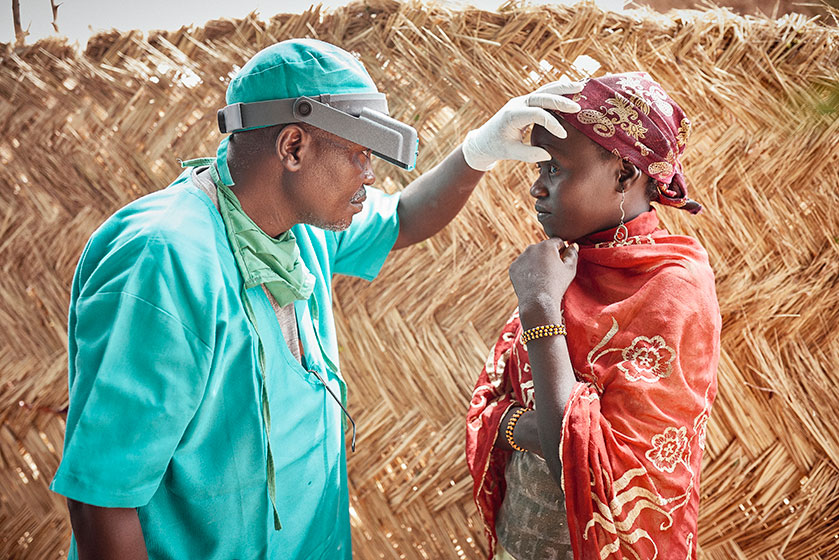
Dr. Abdou Ousseini, a public health physician in Niger’s Zinder region, examines a patient's eyelids for trichiasis, a turning of the eyelashes that can permanently scar a trachoma sufferer’s corneas. (Photo: The Carter Center/S. Phelps)
Trachoma can be found in 39 countries, mostly in Africa and the Middle East, and a few in the Americas and Asia.
Globally, 103 million people are at risk for trachoma. However, 1.5 million are still at immediate risk for blindness from trachomatous trichiasis, also known as TT.
The Carter Center works to control and prevent blinding trachoma in Ethiopia, Niger, South Sudan, and Sudan. Ethiopia has the highest known burden of active trachoma infection in the world. The Carter Center supports Ethiopia’s (and thus the world’s) most affected region, Amhara.
The Carter Center's Trachoma Control Program was established in 1998. As a global leader in the fight against trachoma, the Center and partners implement the World Health Organization-endorsed SAFE strategy for trachoma control. SAFE is a multipronged approach to trachoma prevention that comprises Surgery, Antibiotics, Facial cleanliness, and Environmental improvement.

In the Amhara region of Ethiopia, a boy washes his face to prevent trachoma infection. (Photo: The Carter Center)
Please sign up below for important news about the work of The Carter Center and special event invitations.
Antibiotic distribution to treat children's active trachoma infections brings auxiliary benefits to public health and may reduce child mortality, since antibiotics can help cure common childhood killers like diarrheal diseases. Read more >
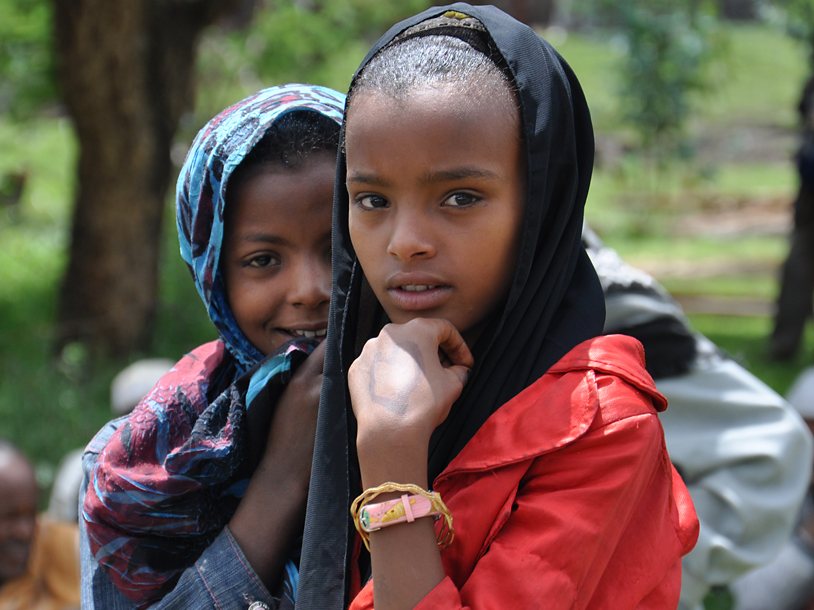 Meet people whose lives have been changed by the Carter Center's Trachoma Control Program.