Mental Health and Caregivers
The Carter Center continues the legacy of former First Lady Rosalynn Carter by working to advance two causes she championed throughout her life: improving mental health and supporting caregivers.
Mrs. Carter was a visionary, recognizing early on that these two issues were fundamental to the health and well-being of families and communities. During her time as First Lady, she advocated for both causes and continued her groundbreaking work after leaving the White House, advancing mental health at The Carter Center and supporting caregivers through the Rosalynn Carter Institute for Caregivers (RCI).
In July 2025, the two organizations formally merged, bringing together their critical missions under one roof. This merger offers new opportunities to find synergies between the two programs and expand their impact.
In the field of mental health, The Carter Center works to raise awareness, influence public policy, advocate for mental health equity, and combat stigma and discrimination against individuals with mental illnesses. Our initiatives - the Rosalynn Carter Fellowship for Mental Health Journalism, Global Mental Health, and Public Policy – are global, with presence in the United States and internationally.
The Carter Center’s new caregiver programs will build on the strong foundation created by RCI. These programs aim to connect caregivers in the United States to essential services, raise awareness about their vital roles, and advocate for policies that offer better support.
Mental illnesses are a leading contributor to the burden of disease, both in the United States and around the world. According to the World Health Organization, 970 million people worldwide or 1 in every 8 people were living with a mental disorder before the COVID-19 pandemic. In the United States, around one in five adults experience some form of mental illness. Amidst significant advances in research that show how even the most serious mental health conditions can be treated, large gaps in access and quality of care remain, preventing individuals, families, and communities from reaching their full potential.
The Mental Health Program uses the Center's convening power to bring together health leaders and organizations to address important mental health challenges in the U.S. and internationally. In the U.S., the program seeks to improve public policy at a state and national level. Internationally, the Program works to strengthen mental health systems and reduce stigma and discrimination against people living with mental health and substance use conditions. The Center works with key partners including media houses, journalists, government, iNGOs, community leaders, and civil society partners, to promote mental health awareness and service delivery that can be sustained over decades.
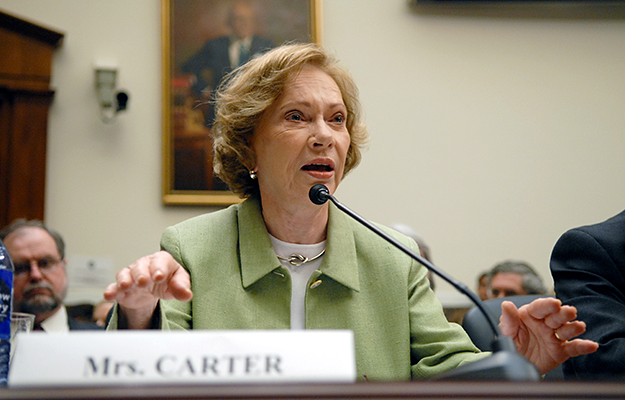
On July 10, 2007, Rosalynn Carter testified before a U.S. House of Representatives subcommittee in favor of the Wellstone Domenici Mental Health Parity and Addiction Equity Act, calling for mental illnesses to be covered by insurance on par with physical illnesses. (Photo: The Carter Center)
Using its unique position in Georgia, the Carter Center’s Mental Health Program works to advance evidence-based public policy at the state level while identifying best practices that can inform policy change in other states and at the federal level. A key focus of our work is to implement and enforce parity laws so that people can access behavioral health treatment.
During the 2022 state legislative session, the Georgia General Assembly voted unanimously to pass the Mental Health Parity Act, ensuring for the first time that the state will enforce parity in insurance coverage for behavioral health care.
The Mental Health Parity Act (Georgia General Assembly - HB 1013 (ga.gov)) will help Georgians access affordable mental health and substance use disorder treatment for themselves and their children by ensuring that public and private health insurance plans cover behavioral health equitably with physical health.
Health care policy is shifting from a focus solely on the management of illnesses toward one that proactively creates health and well-being in individuals, organizations, and communities, otherwise known as population health. Population health focuses on building “cultures of health” to reduce the burden of disease and maximize overall health and well-being. Evidence shows that behavioral health plays a major role in the successful completion of these efforts. Therefore, the Mental Health Program has undertaken a multiyear endeavor to help ensure that the consideration of behavioral health and well-being is at the center of efforts to manage the health of populations. To ensure success, the Mental Health Program develops tools and strategies that utilize evidence-based approaches to prevention, treatment, and health promotion.
The Carter Center Mental Health Program is engaged in a collective effort to strengthen, expand, and sustain school-based behavioral health, prevention, early intervention, and services and supports in the state of Georgia.
The coronavirus pandemic and the resulting economic recession have negatively affected many people’s mental health and exacerbated conditions for people already suffering from mental illnesses and substance use disorders.
The Mental Health Program continues work to ensure access to behavioral health services in Georgia and nationally, with a special focus on vulnerable populations, through: 1) implementation and enforcement of parity, or equity in insurance coverage for mental health and substance use conditions, 2) improving access to school-based behavioral health services and supports for youth, and 3) increasing access to care for older adults with mental illness.
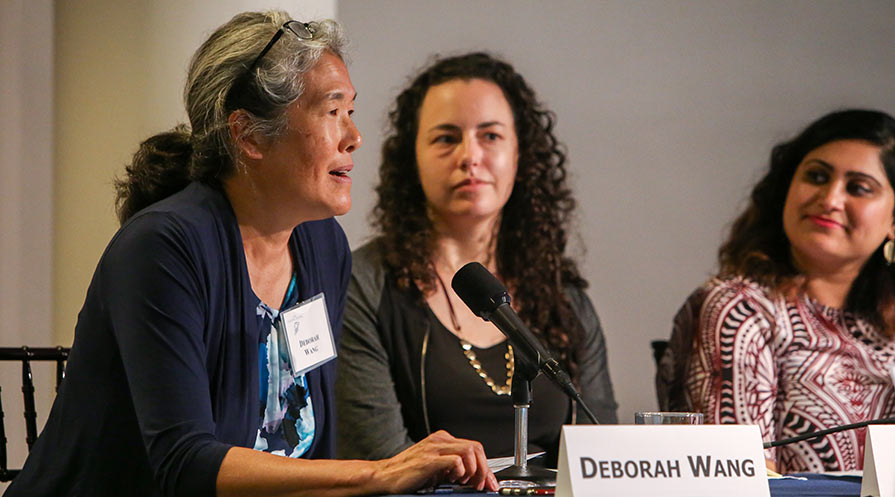
Radio reporter Deborah Wang discusses her experience as a journalism fellow at The Carter Center. Each year, a class of journalists receives training and support to help them accurately report on mental health issues. (Photo: The Carter Center)
As part of an international effort to reduce stigma and discrimination, the Rosalynn Carter Fellowships for Mental Health Journalism provide stipends and training to journalists to support reporting on topics related to mental health and substance use issues. Fellowships currently are awarded to journalists from the United States, Colombia, Qatar, and the United Arab Emirates; previously they were awarded to journalists in Romania, South Africa, and New Zealand. The fellowships develop a cadre of better-informed professional journalists to more accurately and sensitively report information and influence peers and important stakeholders to do the same.
In efforts to expand national and international dialogue on stigma against people with mental illnesses and substance use conditions, the Mental Health Program works with organizations and leaders in the stigma-reduction field providing expertise in media and mental health. The program has worked closely with organizations such as the World Psychiatric Association, California Mental Health Services Authority, Global Anti-Stigma Alliance, the Substance Abuse and Mental Health Services Administration, and the National Academies of Sciences, Engineering and Medicine. Results from these collaborations have included significant conferences related to stigma reduction, a media guide for journalists, and a national report on the evidence that supports ending discrimination against those with behavioral health conditions. Visit mentalhealthjournalism.org for more information on this project.
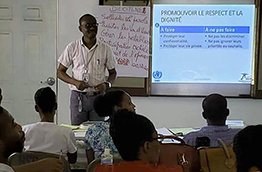
The Carter Center’s Mental Health Program advances policies and practices that expand access to quality treatment and support for mental illnesses and substance use disorders in low- and middle-income countries, confronting stigma and discrimination, and fostering sustainability through strong local ownership. Partnering with the governments in low- and middle-income countries, the Global Program Team facilitates training of the mental health workforce, assists Ministries of Health in designing, reforming, and implementing mental health policies, supports anti-stigma programming and advocacy, conducts operational research, and empowers people living with mental health conditions and their caregivers. The Program has focused on strengthening mental health in Liberia for the past 15 years and is now adapting and sharing lessons learned, catalyzing mental health reform in Sierra Leone, Uganda, and other country contexts.
You can read more about how we are supporting caregivers here, where you also will find more about the history of The Rosalynn Carter Institute for Caregivers, which merged with The Carter Center on July 1, 2025.
Please sign up below for important news about the work of The Carter Center and special event invitations.
The Rosalynn Carter Institute for Caregivers has formally merged with The Carter Center, under its Mental Health program.
Are you a caregiver or caregiver organization looking to connect with us? Please email us!
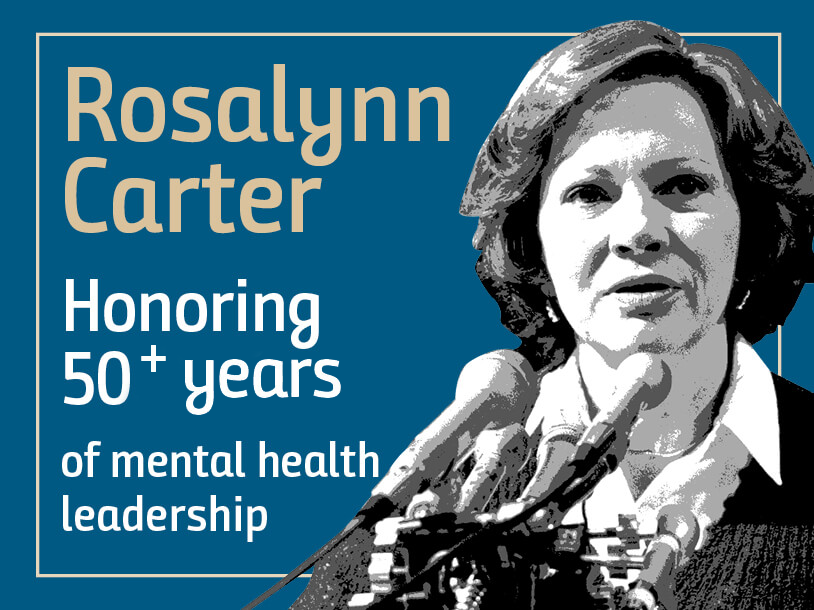
– Rosalynn Carter"We have to get the word out that mental illnesses can be diagnosed and treated, and almost everyone suffering from mental illness can live meaningful lives in their communities."
 Meet people whose lives have been changed by the Carter Center's Mental Health Program.