Latin America and Caribbean
The Carter Center works in Latin America and the Caribbean to enhance the quality of democracy in the region and make it more accountable to citizens. Projects aim to strengthen regional capacities to uphold democracy, transform and prevent conflicts, and improve governance.
In pursuit of this mission, the Center conducts activities in three principal areas: promoting democracy and preventing democratic crises through the Friends of the Inter-American Democratic Charter and the Organization of American States; addressing contentious issues in democracy; and building peace in Colombia.
The Carter Center works closely with the Organization of American States to strengthen regional capacities and serves as the secretariat of the Friends of the Inter-American Democratic Charter, a group of former presidents, prime ministers, cabinet ministers, and human rights experts.
Through quiet diplomacy and fact-finding missions, the Friends listen to disputing parties in country conflicts, encourage peaceful and constitutional means to resolve conflict, focus international attention at critical political moments (including elections), and contribute to more informed diplomatic actions. Read more about the Friends’ work.
The Center aims to promote a constructive, facilitated debate on pressing and controversial issues affecting the region and to strengthen local capacities to address these tensions. The Center conducts seminars, roundtables, and trainings to address these issues and inform debate to influence advocacy and policymaking, and to strengthen democracy. The initiative seeks to identify critical topics and utilize the Carter Center’s convening power to promote dialogue and generate knowledge.
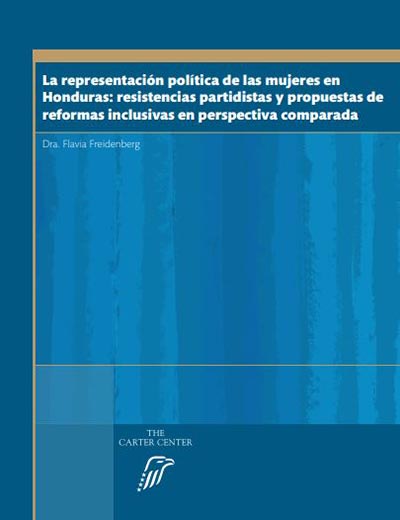
The Carter Center strives to help overcome controversy and move toward identifying common ground to strengthen democracy with ongoing and new projects in Nicaragua, Mexico, Guatemala, El Salvador, and Honduras. Topics include the protection of journalists and freedom of expression, electoral reform and campaign equity, and political participation.
The government of Colombia and the Revolutionary Armed Forces of Colombia-People’s Army (FARC-EP) signed a peace accord in 2016 after four years of formal negotiations in Havana, Cuba.
The Carter Center has closely monitored the process since its initial stages and has organized several key activities in support of peacebuilding in Colombia. It supports the implementation of the peace agreement through four active projects that build local capacity to promote and protect human rights and ensure a lasting peace: It monitors the implementation of political-participation mandates as described in the peace accord; it provide technical support to the Office of the Presidential Advisor for Human Rights to build a national human rights information system and build local capacity in conflict-ridden areas to respond to human rights violations; it helps monitor the separation of child soldiers from the FARC-EP as requested by both sides in the negotiations; and it coordinates a peace education task force to promote national reconciliation.
Please sign up below for important news about the work of The Carter Center and special event invitations.