where we work
The Carter Center began working to build peace in Nepal in 2004, mediating conflict between various factions. It observed the country's first constituent assembly elections in 2008 and then conducted long-term political and constitutional monitoring until June 2013. Later that same year, it observed a second constituent assembly election. Nepal adopted a new constitution in September 2015, and in 2017, The Carter Center returned to observe the first federal and provincial elections under the new constitution.
2017 Federal and Provincial Elections
Nepal’s first election under the new 2015 Constitution was held in two phases. In some parts of the country, voters went to the polls on Nov. 26, 2017; voters in other parts of the country did not go to the polls until Dec. 7. Tallying and counting for both phases took place after the polls closed on Dec. 7.
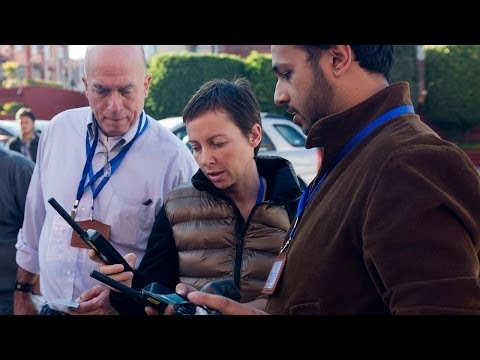
The Carter Center observed both phases of the election. On Phase 1 election day, 16 observers visited 68 polling centers in the six provinces where voting took place. For Phase 2 polling, a total of 64 observers from 34 countries were mobilized across all seven provinces, visiting 214 polling centers. In total, the Center observed election-day procedures in 32 districts and 282 polling centers.
Observers assessed the conduct of voting on both election days as positive in 97 percent of the polling centers they visited. Voting was conducted in a peaceful, orderly manner, although ongoing violence occasioned a heavy security presence at all polling locations. Observers reported isolated problems with assuring the secrecy of the vote, family voting, and improper assisted voting. In some counting centers, officials restricted observers’ access, decreasing the transparency of the counting process. In centers where observers did have access, they reported that counting took place in a manner generally consistent with international standards, though there were widespread deviations from Nepal’s own established procedures. The Carter Center’s preliminary statement can be found here.
2013 Constituent Assembly Election
The Carter Center observed Nepal's Nov. 19, 2013, constituent assembly election, a long-delayed vote to replace the assembly that was dissolved in May 2012 after failing to draft a new constitution.
The Carter Center found that the election was conducted remarkably well, especially in the face of attempts by boycotting parties to disrupt the process through violence. The Election Commission of Nepal estimated the voter turnout at more than 70 percent.
The Center's mission was led by former U.S. President Jimmy Carter and former Deputy Prime Minister of Thailand Dr. Surakiart Sathirathai.
Twelve long-term observers from eight countries were deployed throughout the country in September to assess election preparations. On election day, 66 Carter Center observers from 31 countries visited 336 polling centers and 31 counting centers. The Center's observers assessed the conclusion of counting and vote tabulation and remained in Nepal to observe the resolution of complaints and the post-election environment. The Carter Center’s 2013 final report can be found here.
2008 Constituent Assembly Election
After a decade-long conflict, a comprehensive peace agreement between the government of Nepal and Maoist rebel leaders called for the creation of an interim constitution, monitoring of the arms and armies of the state and the Maoists by the United Nations, establishment of an interim transitional assembly and government that included the Maoists, and an election to form a constituent assembly. After two postponements, the constituent assembly election was held on April 10, 2008.
The Carter Center launched an international election observation mission with the deployment of 13 long-term observers in all regions of the country on March 9, 2007. Despite two election-date postponements, the Center maintained its observation presence in the country throughout the entire electoral process to continually monitor and report on the evolving political situation. It deployed a larger, short-term delegation of 62 observers from more than 20 countries to observe the April 10, 2008, constituent assembly election. Despite worries caused by a pre-electoral period marred by incidents of violence, Carter Center observers found that on election day, the majority of Nepali voters participated in a remarkable and relatively peaceful election that was generally well-executed. The Carter Center’s 2008 final report can be found here.
The main task of the elected constituent assembly was to complete the writing of a new constitution. After failing to do so, the body was dissolved on May 28, 2012.
Transition Monitoring
In June 2009, The Carter Center deployed international and national observers around the country to monitor the peace and constitution-drafting processes and provide impartial information on progress in these areas to political and civil society leaders.
Observers were deployed in teams of three (two internationals and one national) to each of the five development regions, where they follow topics related to marginalized groups' activities and participation in the peace process, political space at the local level, implementation of the Comprehensive Peace Agreement, and the security environment. Teams met with local officials in their districts as well as with civil society leaders and local citizens. The information they gathered was compiled into reports that were widely distributed at the local, district, and national level, and reported on in local and international media. The Center also engaged with national and local political leaders to address political solutions.
Over the course of the project, The Carter Center issued more than 20 public reports on such issues as security, federalism, identity-based politics, voter registration, and land ownership, among others.
Conflict Resolution
Carter Center staff members met with royal and government officials and representatives from other national organizations in 2004 to discuss possible solutions to the civil conflict and avenues of mediation. The Carter Center held several rounds of conflict resolution training for political party representatives and civil society leaders, held bridge-building sessions with Maoist representatives in Nepal, and worked in broad cooperation and coordination with international organizations engaged there. The Center's sustained engagement eventually transformed into a democracy-focused project as Nepal's internal political dynamics changed.
Please sign up below for important news about the work of The Carter Center and special event invitations.