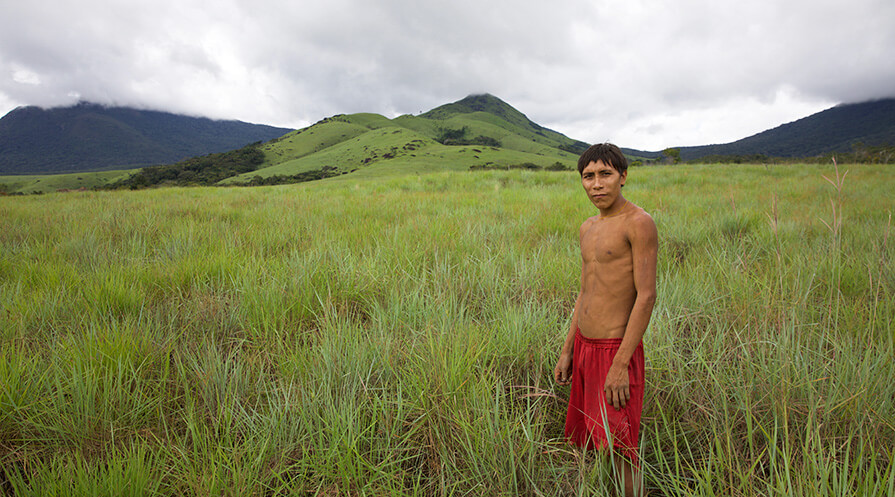
The indigenous Yanomami live in the Amazon Rainforest, the only place in the Western Hemisphere with active transmission of river blindness. (Photo: CAICET/Oscar Noya Alarcón)
The Carter Center's Onchocerciasis Elimination Program for the Americas (OEPA) coordinates the regional initiative to end illness and transmission of onchocerciasis (or river blindness) in the Americas.
Working closely with partners and ministries of health, OEPA has successfully eliminated river blindness transmission from Colombia (2013), Ecuador (2014), Mexico (2015), and Guatemala (2016). Partners include the Pan American Health Organization (PAHO), the U.S. Centers for Disease Control and Prevention, academic institutions, USAID, Merck & Co., Inc., and other independent organizations.
A total of 11 of the original 13 endemic areas have eliminated river blindness transmission as a result of health education and mass drug administration (MDA) with ivermectin (brand name Mectizan®, donated by Merck). When an endemic area interrupts transmission, it stops MDA and enters a three-year period of post-treatment surveillance (PTS), after which black flies from the formerly endemic areas are tested for evidence of onchocerciasis. If all endemic areas in a country have successful results after PTS, that country can apply to the World Health Organization for verification of transmission elimination. Due to the program’s successes, 94% of the at-risk population in the Americas originally requiring MDA now no longer needs treatment and four of the six countries with river blindness have been verified by the WHO as free of the disease.
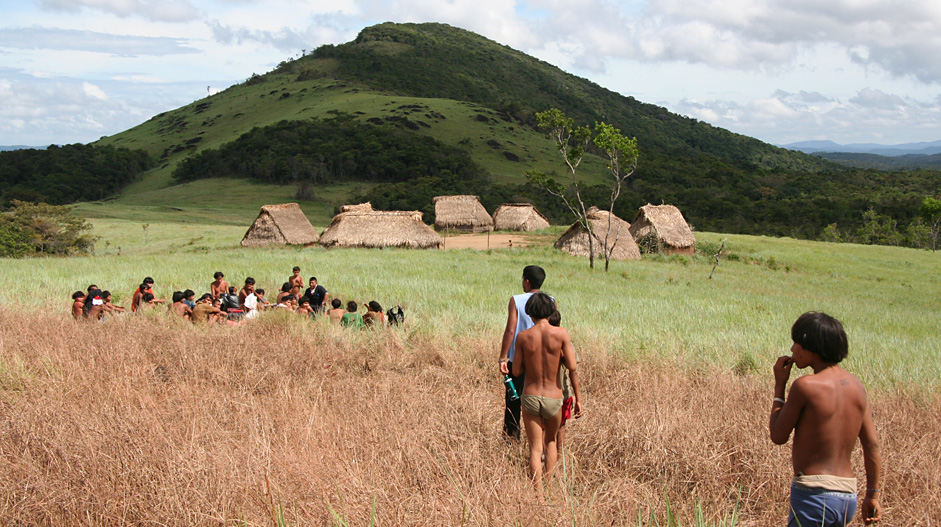
The last cases of river blindness in the Americas are limited to the region where the migratory Yanomami live along the Brazil-Venezuela border.
Today, river blindness transmission in the Americas occurs only among the indigenous, migratory Yanomami people, who live deep in the Amazon rainforest in an area that straddles the border of Venezuela and Brazil. Although comprised of land in two countries, this is a single transmission zone, known as the Yanomami Focus Area (YFA).
As always in an elimination effort, the final inch is the greatest challenge, and consistent Mectizan treatment to the remote populations of the YFA is no exception. The two countries have pledged to eliminate the disease from their shared border, and OEPA is committed to bringing transmission to a halt in the YFA as soon as possible. Soon the Americas region will be permanently free from the threat of this debilitating disease.
Diverse populations and ecosystems are affected by river blindness. In Guatemala and Mexico, the mixed-ancestry and indigenous populations who live on coffee plantations were the most at risk. There, fast-flowing streams providing irrigation to nearby coffee farms acted as breeding grounds for the black flies which spread the disease. The nomadic Yanomami of Brazil and Venezuela are some of the most severely affected groups as their travel throughout the Amazon rainforest places them at continuous risk for exposure.
River blindness is less widespread in the Americas than in Africa. Semiannual treatments — in some cases up to four times annually — with Mectizan over many years can halt disease transmission and improve health by reducing the presence of the parasite's larvae in the human body.
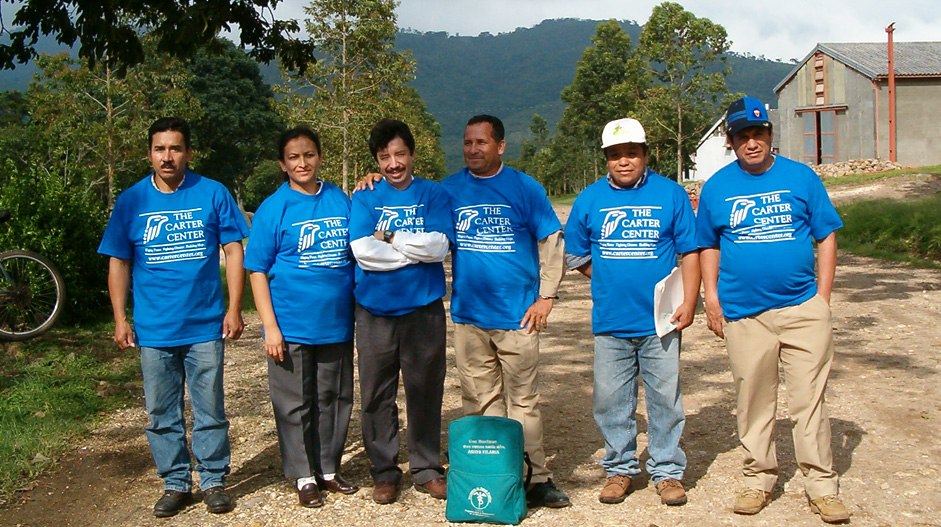
Thousands of community health workers, including these men in Guatemala, have dedicated countless hours to eliminating onchocerciasis in their countries. (All photos: The Carter Center)
Before OEPA started operations in 1993, only 41,911 treatments of Mectizan were administered throughout Latin America, vastly underserving the populations at risk. The Carter Center assumed administrative responsibilities for OEPA in 1996, and twice-per-year treatments began to take off.
After several years of monitoring and evaluation of the program, in 2001, the Carter Center's International Task Force for Disease Eradication, in partnership with the World Health Organization, confirmed that river blindness could be eliminated from the Americas by treating 85 percent or more of infected people with semiannual doses of Mectizan.
Today, the population requiring Mectizan treatment in the Americas has been reduced by more than 95 percent.
Please sign up below for important news about the work of The Carter Center and special event invitations.
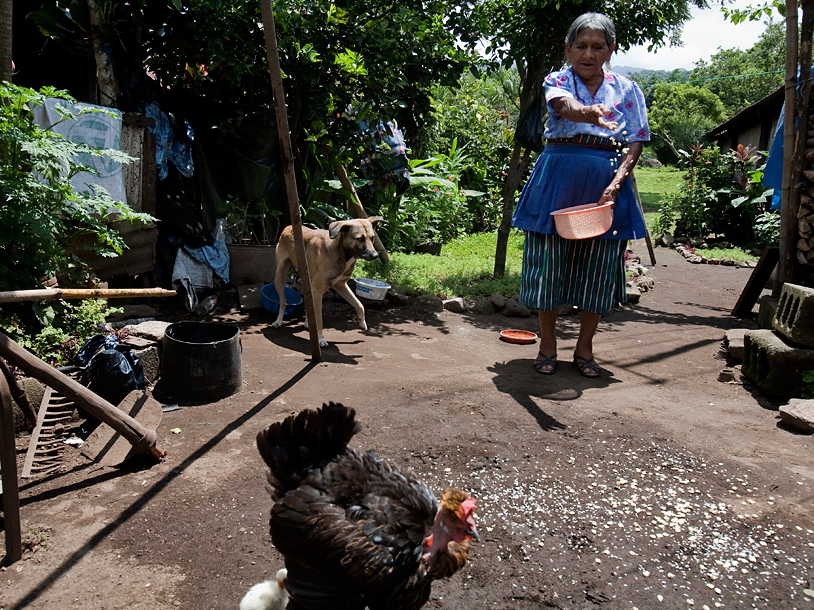 Meet Jozefa Ortiz Rosa: Medication Restores Sight, Brings Hope to Grandmother